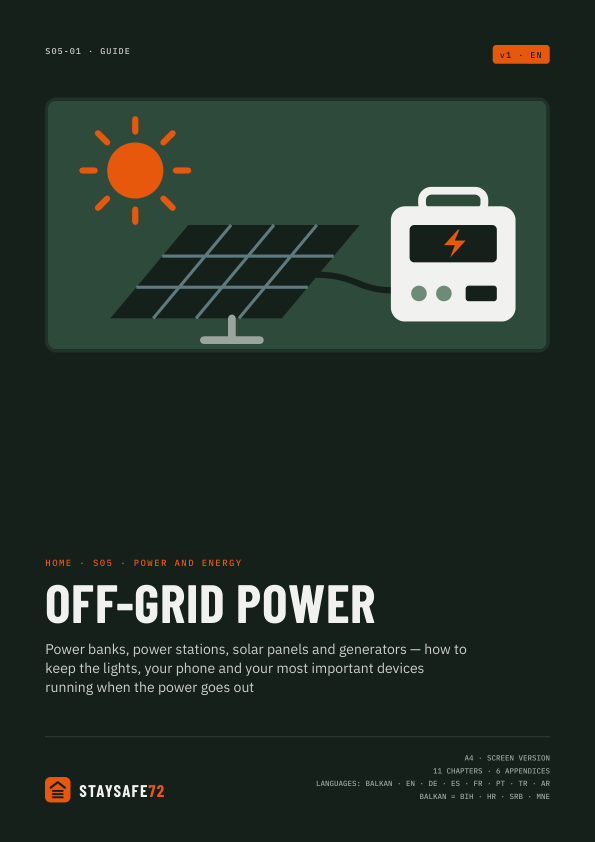
Home · S05-01 · Power & energy
Off-Grid Power
Power banks, power stations, solar panels and generators — how to keep the lights, your phone and your most important devices running when the power goes out
€9
Secure checkout with Stripe · VAT included- Instant download
- Screen + print
- Fillable PDF
- Free updates
- Secure checkout (Stripe)
Levels this guide covers
72 hours2 weeks3 months1 year+
In short
- Start with an energy budget: Wh = power (W) × hours. Add a 20% reserve.
- For 72 hours in an apartment, 2–3 power banks and LED lights are usually enough; for 2 weeks — a 500–1,000 Wh power station plus a solar panel.
- Never run a generator in an apartment, garage, basement, on a balcony or near a window — carbon monoxide kills without any smell.
- Never plug a generator into a wall outlet. Connecting it to your home wiring is a job only for a licensed electrician, with a transfer switch.
- The cheapest power is the power you don't use: LED, 12 V devices and discipline.
What's inside
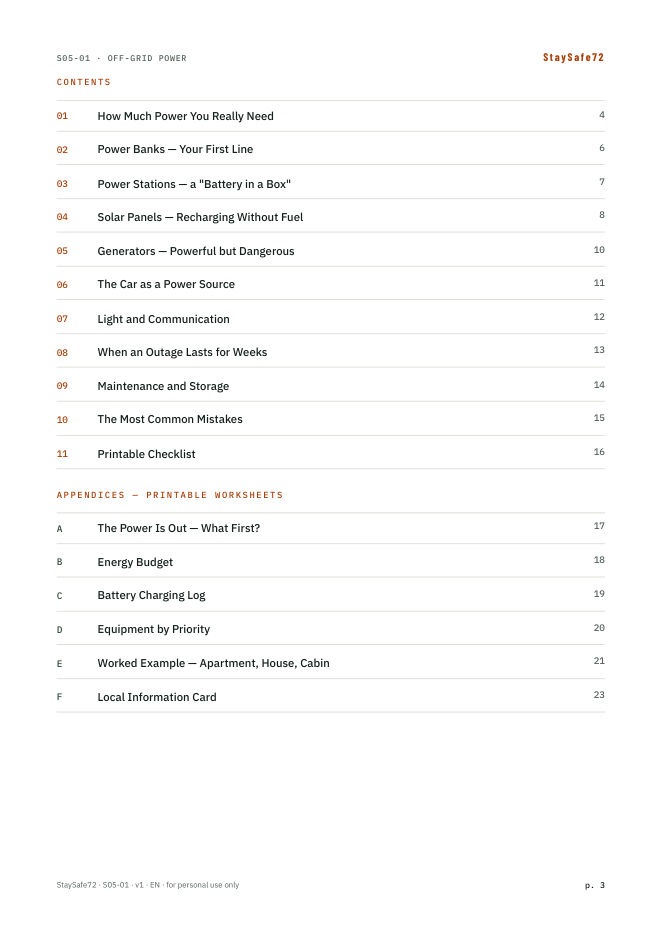
- 01How Much Power You Really Need
- 02Power Banks — Your First Line
- 03Power Stations — a "Battery in a Box"
- 04Solar Panels — Recharging Without Fuel
- 05Generators — Powerful but Dangerous
- 06The Car as a Power Source
- 07Light and Communication
- 08When an Outage Lasts for Weeks
- 09Maintenance and Storage
- 10The Most Common Mistakes
- 11Printable Checklist
Worksheets (appendices)
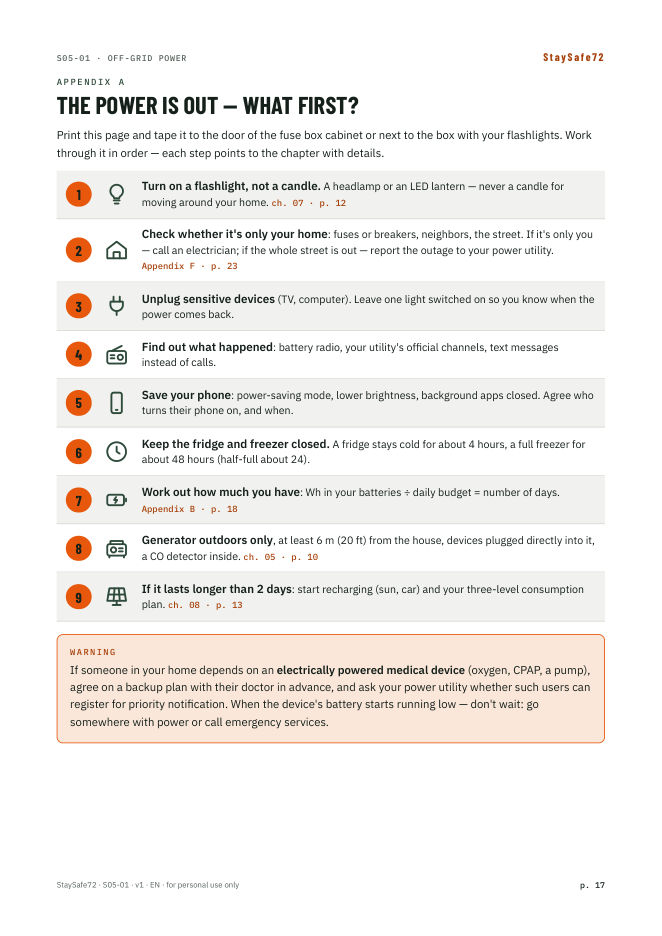
- AThe Power Is Out — What First?
- BEnergy Budget
- CBattery Charging Log
- DEquipment by Priority
- EWorked Example — Apartment, House, Cabin
- FLocal Information Card
Sources are listed on the last page of every guide.
A look inside
Same topic and goes well with

Home · S06-01
Heat and FireHow to stay warm and cook a meal when there is no power and no heating — and how to protect yourself from carbon monoxide and fire
23 pages · 6 worksheets
€7Details →

Home · S04-01
Kitchen Without Power50 pantry recipes for a gas camping stove, a wood stove or no cooking at all
32 pages · 7 worksheets
€9Details →