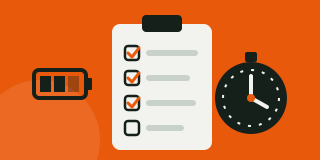
What should you do in the first hour of a power outage?
Check whether only your home is affected (the fuse box) or the whole street, use a flashlight instead of candles, unplug sensitive electronics, keep the fridge and freezer closed, turn on a battery radio and switch your phone to battery saver. In winter, gather everyone in one room and close the other doors.
Six steps
- Check the fuse box. Is it just your home, or the whole building and street?
- Flashlight, not a candle. Candles are a common cause of house fires during outages.
- Unplug sensitive devices (TV, computer, router) — there can be a surge when the power returns. Leave one lamp switched on so you know when it is back.
- Keep the fridge and freezer closed. A closed fridge keeps food cold for about 4 hours, a full freezer for about 48 hours.
- Turn on a battery or crank radio for official information, and switch your phone to battery saver.
- In winter: dress in layers, gather in one room and close the doors to the other rooms.
Never do this
- Never run a generator indoors, in a garage, basement, on a balcony or near a window — carbon monoxide kills without any smell.
- Never plug a generator into a wall outlet. Connecting it to the house wiring is a job for a licensed electrician with a transfer switch.
- Never bring a charcoal grill or an outdoor stove into your home.
For longer outages
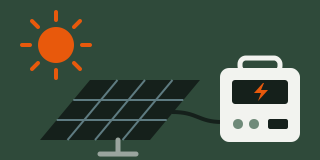
For 72 hours in an apartment, 2–3 power banks and LED lights are usually enough. For two weeks, plan an energy budget (watts × hours + 20% reserve) and consider a 500–1,000 Wh power station with a solar panel.
Off-Grid Power
Power banks, power stations, solar panels and generators — how to keep the lights, your phone and your most important devices running when the power goes out
Worksheets (appendices)
- The Power Is Out — What First?
- Energy Budget
- Battery Charging Log
- Equipment by Priority
- Worked Example — Apartment, House, Cabin
- Local Information Card
Sources: FEMA / Ready.gov — Power Outages; CDC — Carbon Monoxide Poisoning Prevention. Sources are listed on the last page of every guide.
Updated: