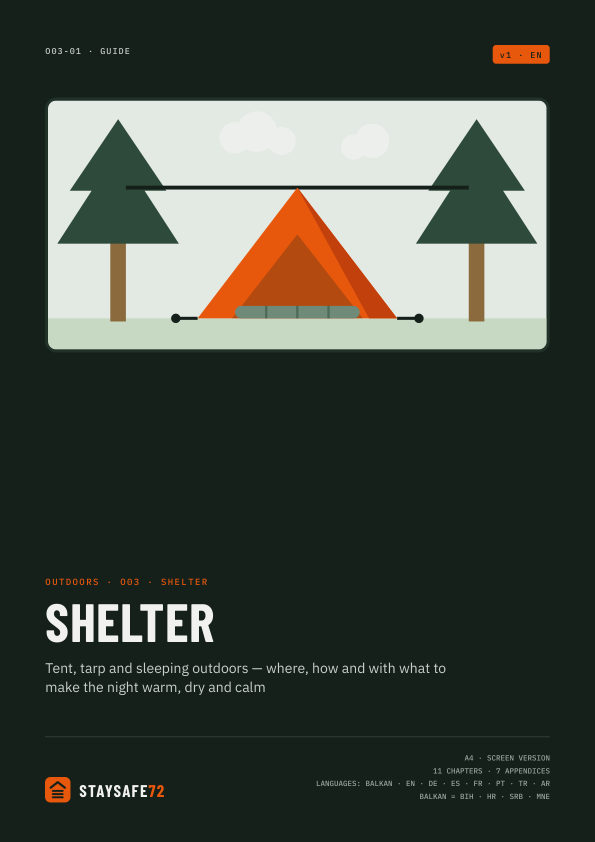
Outdoors · O03-01 · Shelter
Shelter
Tent, tarp and sleeping outdoors — where, how and with what to make the night warm, dry and calm
€9
Secure checkout with Stripe · VAT included- Instant download
- Screen + print
- Fillable PDF
- Free updates
- Secure checkout (Stripe)
Levels this guide covers
72 hours2 weeks3 months1 year+
In short
- The site is half the shelter: shelter from the wind, away from water, dead branches and steep slopes — and after an earthquake, away from buildings and power lines.
- The ground steals more heat than the air — pad first, cover second.
- A 3 × 3 m tarp and 15–20 m (50–65 ft) of cord give a roof for two in about ten minutes.
- Look at the "comfort" rating of a sleeping bag, not the "extreme" one — and plan for the coldest night, not the average.
- Never a fire, stove, heater or grill in the tent — carbon monoxide kills in your sleep.
What's inside
- 01Choosing a Site
- 02Tents: Types and Pitching
- 03Tarp and Cord: Three Setups
- 04Emergency Shelter
- 05Insulation from the Ground
- 06Sleeping Bags and Temperature Ratings
- 07A Warm Night Until Morning
- 08Family Camp After an Earthquake or Evacuation
- 09Camping Rules and Nature
- 10The Most Common Mistakes
- 11Printable Checklist
Worksheets (appendices)
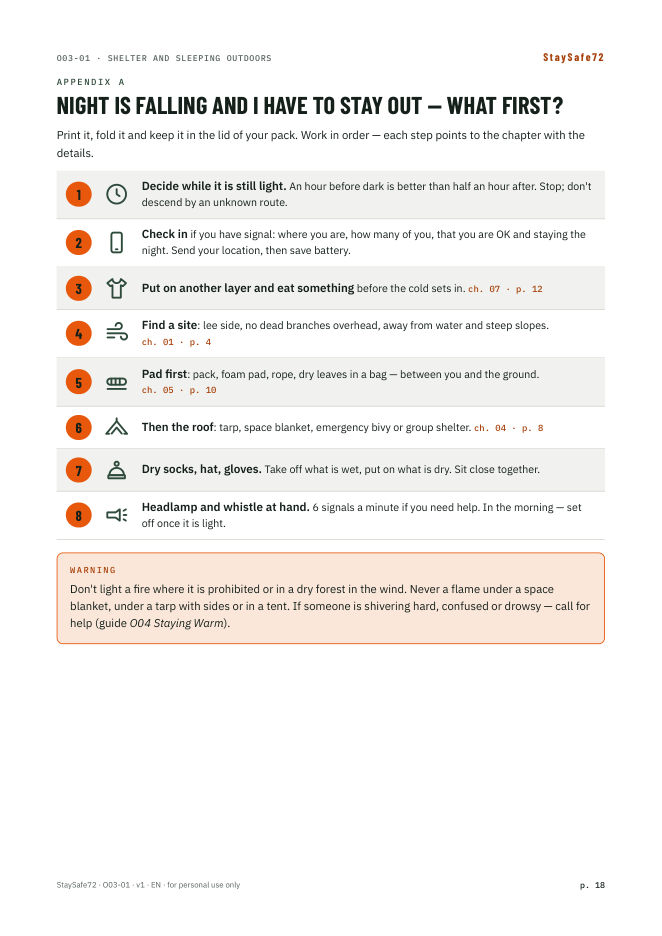
- ANight Is Falling and I Have to Stay Out — What First?
- BCard — Knots and Tarp Setups
- CSleep System by Season
- DFamily Camp Plan
- EEquipment by Priority
- FLocal Information Card
- GWorked Example — Mountain Night and Park Camp
Sources are listed on the last page of every guide.
A look inside
Same topic and goes well with

Outdoors · O00-01 FREE
72 Hours OutdoorsA free field checklist — what to carry, who to tell, when to turn back, and what to do if night catches you outside
22 pages · 6 worksheets
FreeDetails →

Outdoors · O01-01
FireLighting, tending and safety — when you may light a fire, how to start one in wind and rain, and how to put it out completely
25 pages · 6 worksheets
€9Details →
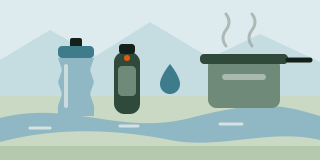
Outdoors · O02-01
Water OutdoorsFinding, filtering and boiling water on the trail, in a tent and in a camp after an earthquake
25 pages · 6 worksheets
€9Details →