Home · S03-01 · Preserving
Home Canning
Safe home canning — from jam and pickles to canned tomatoes and sauerkraut
€12
Secure checkout with Stripe · VAT included- Instant download
- Screen + print
- Fillable PDF
- Free updates
- Secure checkout (Stripe)
Levels this guide covers
72 hours2 weeks3 months1 year+
In short
- Acid foods (fruit, jam, cucumbers and peppers pickled in vinegar, tomatoes with added acid) can be processed in a boiling-water bath.
- Low-acid foods (meat, beans, green beans, corn, potatoes) may be canned only in a pressure canner.
- Follow a tested recipe all the way — never change the vinegar-to-water ratio, the processing time or the headspace "by eye".
- Recipes assume vinegar with 5% acidity. Dilute 9% vinegar first: 5 parts vinegar + 4 parts water.
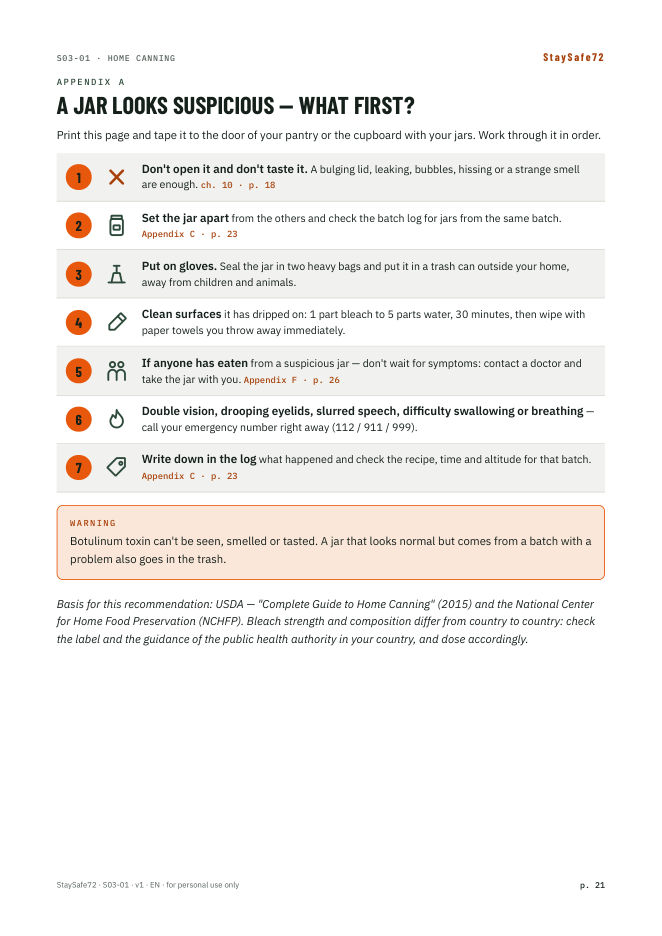
- Bulging lid, leaking, hissing, an unpleasant smell or mold = throw it out without tasting.
What's inside
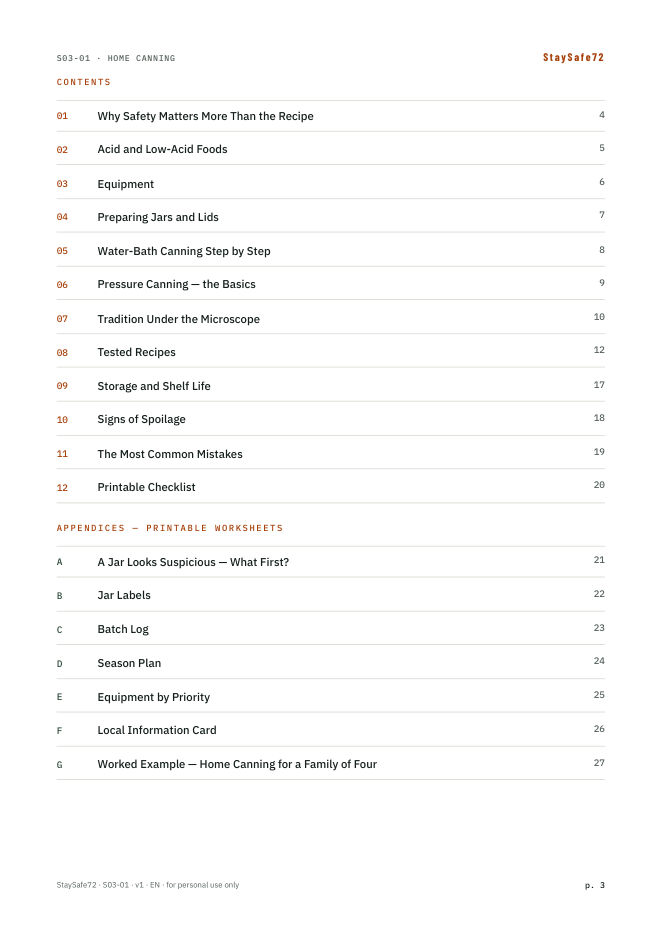
- 01Why Safety Matters More Than the Recipe
- 02Acid and Low-Acid Foods
- 03Equipment
- 04Preparing Jars and Lids
- 05Water-Bath Canning Step by Step
- 06Pressure Canning — the Basics
- 07Tradition Under the Microscope
- 08Tested Recipes
- 09Storage and Shelf Life
- 10Signs of Spoilage
- 11The Most Common Mistakes
- 12Printable Checklist
Worksheets (appendices)
- AA Jar Looks Suspicious — What First?
- BJar Labels
- CBatch Log
- DSeason Plan
- EEquipment by Priority
- FLocal Information Card
- GWorked Example — Home Canning for a Family of Four
Sources are listed on the last page of every guide.
A look inside
Same topic and goes well with
Home · S02-01
Food StockpileHow to plan, organize and rotate a family food supply — from two weeks to one year
25 pages · 6 worksheets
€12Details →

Home · S08-01
Balcony GardenGrowing food on a windowsill, a balcony and in a small garden — a step toward family self-reliance
26 pages · 7 worksheets
€9Details →